
 Contact Us

Pipe Fiber Laser Cutting Machine: Precision, Speed, and Versatility for Tubular Metal Processing
In modern metal fabrication, round tubes, square pipes, and custom profiles are everywhere — from automotive roll cages and hydraulic lines to handrails, furniture frames, and exhaust systems. For decades, manufacturers relied on sawing, milling, or punching to cut and shape tubes. These methods are slow, waste material, and struggle with complex geometries. The pipe fiber laser cutting machine has changed the game entirely. It combines high power fiber laser sources, precision motion control, and intelligent nesting software to cut tubes with unmatched speed, accuracy, and repeatability.
A single pipe fiber laser system can replace up to five traditional machines (saw, punch, drill, mill, deburr), reducing floor space by 60% and cutting lead times by over 70%.
How a Pipe Fiber Laser Cutter Works
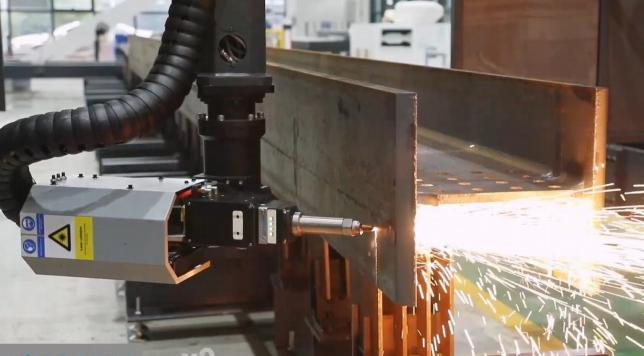
Unlike flat sheet laser cutters, pipe laser cutting machines are specifically designed to rotate and feed tubular materials through a specialized chuck or roller system. A high-power fiber laser beam (typically 1kW to 6kW or more) is focused through a cutting head that can tilt for bevel or chamfer cuts. The tube rotates along its axis while the cutting head moves linearly, allowing any contour — holes, slots, notches, miters, and complex cutouts — to be made in a single clamping operation. Advanced models support autofocus, real-time seam tracking, and automatic loading/unloading.
Key Advantages Over Conventional Tube Cutting Methods
Compared to band sawing, cold sawing, abrasive cutting, or plasma, fiber laser tube cutting offers dramatic improvements:
Zero mechanical stress: Non-contact process eliminates deformation, burrs, and workpiece clamping marks.
Unlimited geometry: Cut any shape: holes, cutouts, tabs, notches, slots, miter joints, and beveled ends.
Nesting efficiency: Software nests multiple parts along the tube length, reducing scrap by up to 30%.
High speed: Cutting speeds up to 20-30 m/min for thin-wall tubes (1-3mm thickness).
No tool wear: No blades or dies to replace; only assist gas and protective lenses.
Automation ready: Easily integrated with tube loaders, unloaders, and sorting conveyors.
Technical Capabilities & Performance Benchmarks
Modern pipe fiber laser cutting machines handle a wide range of diameters, lengths, and materials. Below is a typical specification profile:
| Parameter | Typical Range |
|---|---|
| Laser power options | 1kW – 6kW (12kW for heavy wall sections) |
| Tube diameter (round) | 10mm – 400mm (larger with special chucks) |
| Square / rectangular tube size | 10x10mm – 300x300mm |
| Maximum tube length (single loading) | 6m – 12m (extensions available) |
| Cutting speed (mild steel, 2mm wall) | up to 25 m/min |
| Positioning accuracy | ±0.05 mm / 1000mm |
| Repeatability | ±0.03 mm |
| Materials compatible | Carbon steel, stainless steel, aluminum, copper, brass, titanium |
Industries & Applications Transforming with Pipe Laser Cutting
Automotive & Motorsports
Roll cages, chassis frames, exhaust pipes, seat frames, hydraulic tubes, fuel lines, and EV battery cooling tubes. Laser cut holes and notches eliminate secondary drilling and ensure weld prep consistency.
Furniture & Interior Design
Metal chair legs, table frames, shelving systems, handrails, and decorative tube elements. Clean edges mean no grinding before powder coating.
Aerospace & Defense
High-precision cutting of thin-wall titanium and Inconel tubes for hydraulic systems, airframes, and engine components. Minimal heat-affected zone preserves material integrity.
Heavy Equipment & Agricultural Machinery
Chassis components, rollover protection structures (ROPS), hydraulic cylinders, and linkage arms. Thick wall cutting up to 15-20mm is possible with high-power fiber lasers.
Medical Devices & Surgical Instruments
Stainless steel and nitinol tubes for surgical tools, endoscopic components, and implantable devices. Micro-cuts with burr-free quality.
General Industrial & Construction
Scaffolding pipes, guardrails, conveyor rollers, structural supports, and electrical conduit. High throughput for standard profiles with fast changeover.
Material Compatibility & Thickness Guide
Pipe fiber lasers excel on a variety of metals. The table below shows approximate cutting thickness limits for a 3kW to 6kW system:
| Material | Wall thickness range (mm) | Edge quality |
|---|---|---|
| Mild steel (carbon steel) | 0.5 – 16 (up to 20 with 6kW) | Excellent, dross-free with oxygen or nitrogen |
| Stainless steel 304/316 | 0.5 – 12 | Superior, mirror-like finish with nitrogen |
| Aluminum 6061 / 5052 | 0.8 – 10 | Clean cut, minimal burr |
| Copper / Brass | 0.8 – 6 | Good with high-pressure nitrogen |
| Titanium | 0.5 – 8 | Very good, small HAZ |
For thick wall carbon steel (above 12mm), oxygen-assisted cutting provides faster speeds; for stainless steel and aluminum, high-pressure nitrogen prevents oxidation and delivers a bright cut face ready for welding.
Automation & Smart Factory Integration
Today's pipe laser cutting machines are designed for Industry 4.0. They feature:
Automatic tube loading magazines: Load up to 6-12 meters of raw tube stock; the system feeds material automatically.
Smart nesting & CAD/CAM software: Import 3D models (STEP, IGES) or 2D DXF files; software automatically nests parts along the tube, calculates cut paths, and generates CNC code.
Remote monitoring & diagnostics: Track machine utilization, gas consumption, and maintenance alerts via cloud dashboards.
Post-cutting sorting conveyors: Finished parts are unloaded and separated from remnant ends automatically.
These features enable lights-out production, where the machine runs overnight with minimal operator intervention — dramatically increasing throughput and lowering cost per part.
Economic & ROI Considerations
While the initial investment in a pipe fiber laser cutter is higher than traditional saws or punch presses, the payback period is typically 12 to 24 months for shops with moderate to high tube processing volume. Key savings come from:
Eliminating secondary operations (drilling, punching, deburring).
Reducing direct labor from 3-4 operators to 1 part-time attendant.
Increasing material yield by 15-30% through intelligent nesting.
Lowering consumable costs (no blades, punches, or dies).
Shortening lead times, allowing more orders per month.
Future Trends in Pipe Laser Cutting
The next generation of pipe fiber laser systems is moving toward even higher automation and intelligence. Expect to see:
AI-powered parameter optimization: Cameras and sensors will automatically adjust focus, gas pressure, and speed for each tube batch.
Hybrid processing: Adding marking, welding, or tube bending capabilities to a single machine.
Green laser sources: Better absorption for copper and brass tubes without back-reflection damage.
Full integration with ERP/MES: Real-time production scheduling and inventory tracking for just-in-time tube processing.
HOYSOOK Industrial Solutions — advanced pipe fiber laser cutting machines for round, square, rectangular, and special profiles. Boost your tube processing productivity with precision automation.
 bruce@hoysook.com
 +86 150 6978 7316
 No.2 Leipade Industrial Park, Zichuan District, Zibo City, Shandong Province